
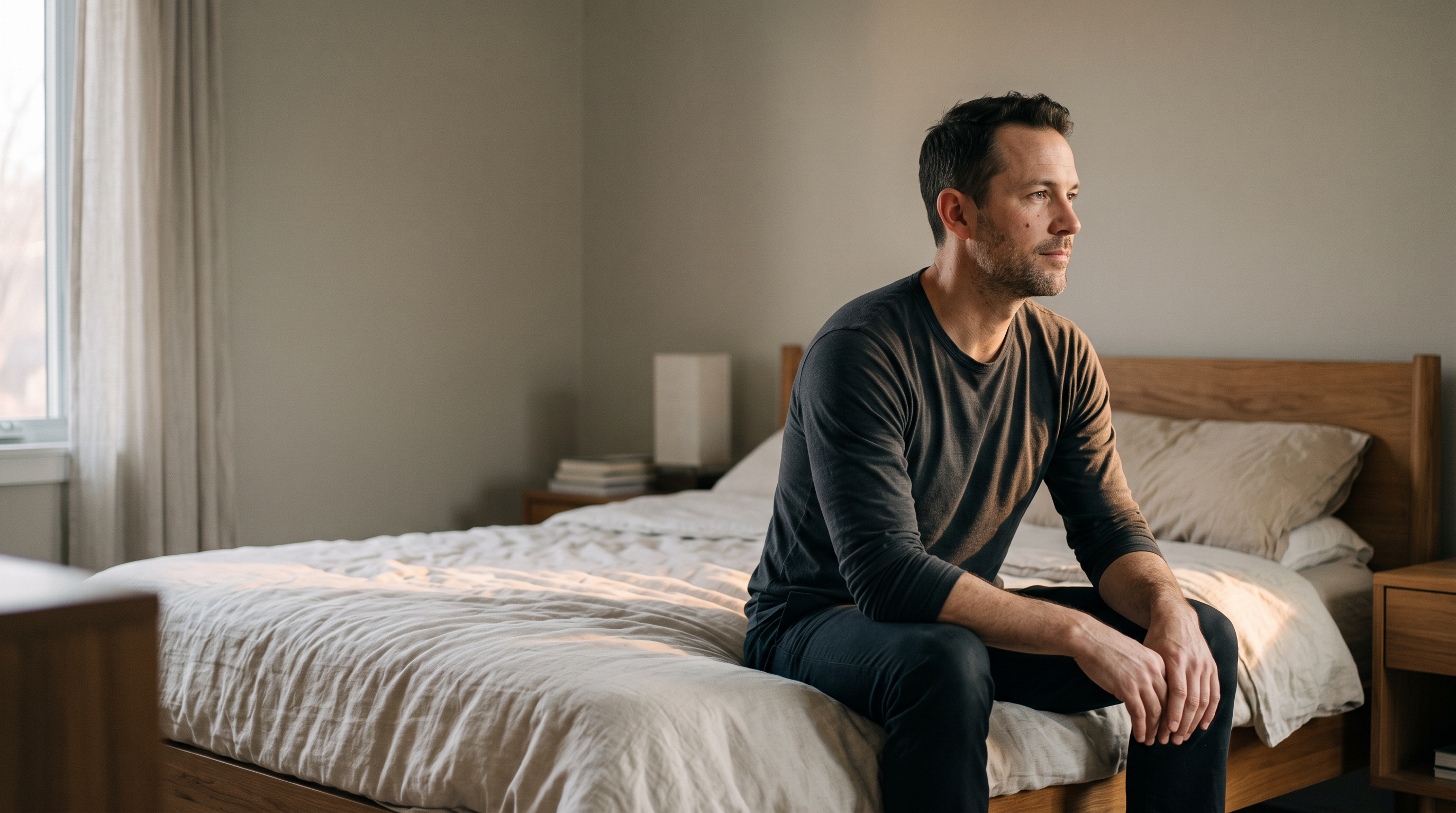
Tiredness alone doesn't mean low hormone levels
Low energy, poor sleep, reduced libido and low mood are common, and many things can cause them. That's why current guidance is clear: symptoms alone don't diagnose low hormone levels.
The medical term for a genuine deficiency is hypogonadism. The Endocrine Society's guidance requires two things together: symptoms or signs of deficiency, and consistently low hormone levels on accurate blood tests.
Symptoms that can prompt testing
- Reduced libido or fewer morning erections
- Erectile difficulties
- Low energy or low mood
- Loss of muscle or strength
- Increased body fat
Any of these can have another cause, including poor sleep, stress, depression, weight gain or certain medicines.
How the blood tests work
Hormone levels vary through the day and can be affected by illness and food. Guidelines therefore call for at least two early-morning, fasting measurements. A commonly used threshold is around 300 ng/dL, and free level may also be measured when total level is borderline.
Your doctor may also measure LH and FSH. These hormones help show whether the problem starts in the testes or in the brain's signalling.
Reversible causes should be looked at first, including obesity and the use of corticosteroids or opioids. For overweight men with no other cause identified, weight loss is usually the first step.
Who shouldn't start TRT
The Endocrine Society's 2018 guideline recommends against TRT for men who:
- Plan to father a child in the near future
- Have breast or prostate cancer, or a prostate nodule that needs investigating
- Have a raised PSA that hasn't been assessed by a urologist
- Have an elevated haematocrit
- Have untreated severe sleep apnoea or severe urinary symptoms
- Have uncontrolled heart failure, or a heart attack or stroke in the past 6 months
- Have thrombophilia, a condition that makes blood clots more likely
Fertility deserves particular attention. TRT reduces sperm production, so discuss your plans before you start.
What the safety evidence shows
The TRAVERSE trial followed 5,246 men aged 45 to 80 with existing or high cardiovascular risk. Major cardiac events occurred in 7.0% of men on TRT and 7.3% on placebo, which met the trial's test for cardiovascular safety.
The same trial found more atrial fibrillation, acute kidney injury and pulmonary embolism in the TRT group. The Endocrine Society's 2026 guideline also notes more fractures in the TRAVERSE trials, and says long-term safety, including for prostate cancer, isn't yet established.
What treatment and monitoring involve
Ambrosia dispenses TRT Cypionate as a pre-filled cartridge in two sizes: 400 mg in 2 ml and 600 mg in 3 ml. Your doctor decides your dose and how often you inject it.
Treatment generally aims for TRT in the middle of the normal range, not above it. During the first year, expect your doctor to review:
- Your symptoms, side effects and whether you're using the treatment as prescribed
- Your TRT level
- Your haematocrit, because TRT can thicken the blood
- Your prostate cancer risk, where relevant
Other possible side effects include acne, oily skin, fluid retention and reduced testicular size.
Questions to ask your doctor
- Have my low results been confirmed on two morning tests?
- Is there a reversible cause we should treat first?
- How will this affect my fertility?
- When will my next blood tests be?
Every Ambrosia treatment requires a prescription from a doctor who has reviewed your medical history.
This article is for educational purposes only and is not medical advice.
