Why Belly Fat Is Different
Not all body fat is created equal. Subcutaneous fat sits just beneath the skin, but visceral fat — the fat that accumulates around your abdominal organs — is metabolically active, stubborn, and strongly linked to cardiovascular disease, insulin resistance, and inflammation.
Visceral fat is notoriously resistant to diet and exercise alone. Even people who lose significant weight elsewhere often retain a stubborn abdominal fat deposit. This is because visceral fat has a high density of alpha-2 adrenergic receptors, which actively inhibit fat breakdown.
This is where certain medical treatments have drawn clinical interest — not as weight-loss shortcuts, but as targeted tools that influence how the body mobilises and metabolises fat.
Tesamorelin: The Most Studied Fat-Targeting Medical Treatment
Tesamorelin is a growth hormone-releasing hormone (GHRH) analogue. It stimulates the pituitary to produce endogenous growth hormone, which in turn increases the production of IGF-1 (insulin-like growth factor 1).
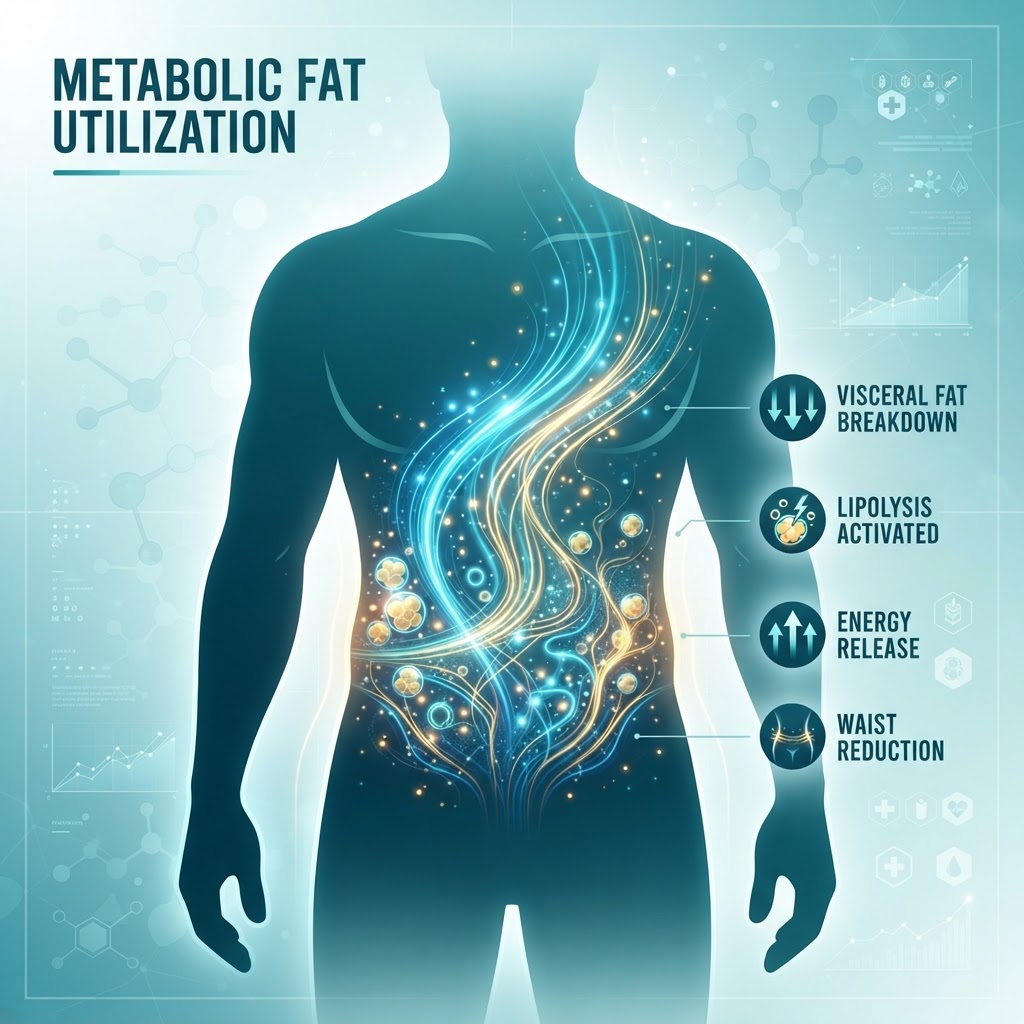
Growth hormone plays a key role in lipolysis — the breakdown of stored fat into free fatty acids that can be used for energy. Critically, growth hormone appears to have a particular affinity for mobilising visceral fat.
The Clinical Evidence
Tesamorelin is one of the few medical treatments with robust human clinical data. It was originally developed and FDA-approved under the brand name Egrifta for the treatment of visceral fat accumulation in HIV-associated lipodystrophy — a condition where patients on certain antiretroviral therapies develop dangerous deposits of abdominal fat.
In clinical trials, tesamorelin produced significant reductions in visceral adipose tissue compared to placebo. Notably, the fat reduction was specific to visceral fat, not subcutaneous fat — supporting the idea that growth hormone-mediated lipolysis has a preferential effect on abdominal fat.
AOD-9604: The Fat Fragment Medical Treatment
AOD-9604 is a modified fragment of the C-terminus of human growth hormone (amino acids 177–191). It was designed to capture the fat-burning effects of growth hormone without its effects on growth or blood sugar.
In preclinical and early clinical studies, AOD-9604 appeared to stimulate lipolysis and inhibit lipogenesis (fat formation). However, it has less robust human data than tesamorelin and is generally considered a milder option.
How These Medical Treatments Differ from Incretin-Based Medications
It's important to distinguish these fat-loss agents from incretin receptor agonists like semaglutide and tirzepatide. Incretin-based medications work primarily by suppressing appetite and slowing gastric emptying — they reduce how much you eat. Tesamorelin and AOD-9604 work through a fundamentally different mechanism: they directly stimulate the body's fat-mobilisation pathways.
This means they may be particularly relevant for people who have already improved their diet and activity but are still battling stubborn visceral fat.
What to Expect
Medical Treatment-based fat-loss protocols are not a replacement for a healthy lifestyle. They work best when combined with:
- A medical treatment-adequate, calorie-appropriate diet
- Regular resistance training (to preserve lean muscle)
- Adequate sleep (growth hormone is primarily released during deep sleep)
Patients typically use these medical treatments in cycles of 8–12 weeks, with results becoming noticeable from weeks 4–6 onward.
Is It Right for You?
Tesamorelin and related medical treatments require a prescription and medical supervision. They may be appropriate if you have stubborn visceral fat that hasn't responded to lifestyle changes, but they're not suitable for everyone — particularly those with a history of cancer, uncontrolled diabetes, or certain pituitary conditions.
Complete our medical intake to find out if a fat-loss medical treatment protocol is suitable for you.
This article is for educational purposes only and is not medical advice. All medical treatment products require a prescription following medical review.