What Is GHK-Cu?
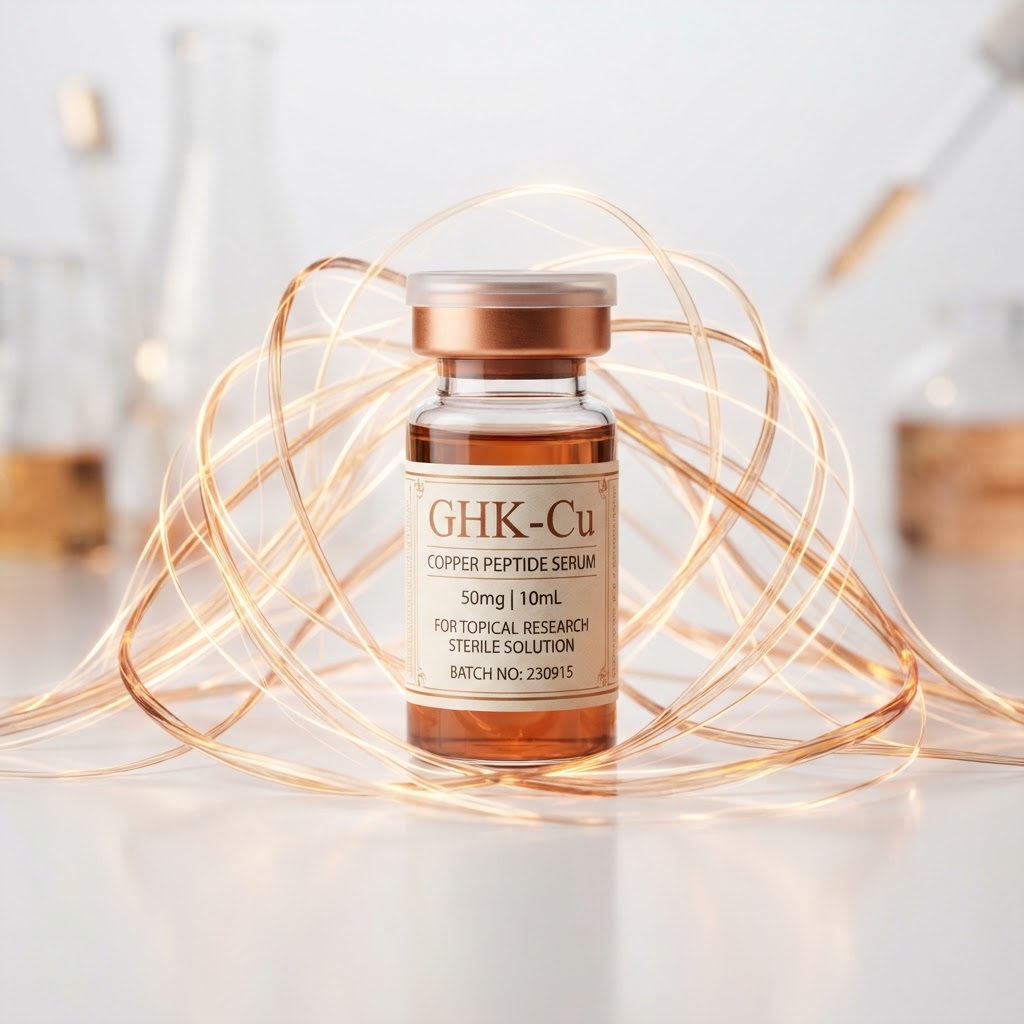
GHK-Cu (glycyl-L-histidyl-L-lysine copper(II)) is a naturally occurring copper-binding compound found in human blood plasma, saliva, and urine. It was discovered in 1973 by Dr Loren Pickart, who observed that certain copper complexes had remarkable tissue-regenerating properties.
What makes GHK-Cu special is that it naturally declines with age. While a 20-year-old has abundant GHK-Cu circulating in their blood, levels drop by more than 60% by age 60. This decline closely mirrors the visible signs of skin ageing — leading researchers to investigate whether restoring GHK-Cu could reverse some of those signs.
The Science of Copper and Collagen
To understand why GHK-Cu is called "the collagen medical treatment," you need to understand copper's role in the body:
Copper is an essential trace mineral required for lysyl oxidase, the enzyme that cross-links collagen and elastin fibres. Without adequate copper, collagen fibres remain weak and disorganised — you can produce collagen, but it won't form the strong, functional network that gives skin its firmness and elasticity.
GHK-Cu delivers copper in a biologically active, bound form that cells can readily use, while also directly stimulating the genes involved in collagen production.
How GHK-Cu Works
Research has identified several mechanisms by which GHK-Cu supports skin health and tissue repair:
1. Stimulates Collagen and Elastin Production
Studies show that GHK-Cu upregulates the expression of genes responsible for producing type I collagen (the main structural collagen in skin) and elastin (the medical treatment that gives skin its ability to snap back). One study found GHK-Cu increased collagen production by up to 70% in fibroblast cultures.
2. Promotes Glycosaminoglycan Synthesis
Glycosaminoglycans (GAGs), including hyaluronic acid, are the moisture-binding molecules that keep skin hydrated and plump. GHK-Cu stimulates their production, improving skin hydration from within.
3. Accelerates Wound Healing
GHK-Cu has been shown to accelerate wound closure, promote the migration of repair cells to injury sites, and reduce scarring. This is why it's used not only for cosmetic purposes but also in wound-healing and surgical recovery protocols.
4. Antioxidant and Anti-Inflammatory Effects
GHK-Cu has demonstrated antioxidant properties, helping to neutralise the free radicals that contribute to oxidative skin damage. It also modulates inflammatory signalling, which is relevant both for skin health and tissue repair.
5. Supports Hair Growth
Copper medical treatments have been studied for their potential to:
- Stimulate hair follicle proliferation
- Extend the anagen (growth) phase of the hair cycle
- Increase follicle size and hair shaft diameter
This has made GHK-Cu popular not just for skin but for hair health protocols.
Injectable vs Topical GHK-Cu
GHK-Cu is available in both topical (serum/cream) and injectable forms:
- Topical GHK-Cu delivers the medical treatment directly to the skin surface. It's effective for surface-level concerns but has limited penetration depth.
- Injectable (systemic) GHK-Cu delivers the medical treatment throughout the body, supporting skin, hair, and connective tissue from the inside out. It also reaches deeper skin layers and supports full-body tissue repair.
Many users combine both approaches — systemic injection for whole-body collagen support, and topical application for targeted skin benefits.
What to Expect: Timeline
GHK-Cu works gradually, as it stimulates the body's own collagen production rather than providing an instant fill. Typical timelines:
- Weeks 1–4: Improved skin hydration; subtle glow; faster healing of minor blemishes and wounds
- Weeks 4–8: Visibly firmer skin; reduced appearance of fine lines; improved skin texture
- Months 2–3: Noticeable improvement in skin elasticity; reports of thicker, healthier hair
- Months 3+: Cumulative improvements in skin quality, tone, and overall youthfulness
Most protocols involve 8–12 week cycles. Consistency is key — collagen synthesis is an ongoing process that requires sustained stimulation.
Who Is GHK-Cu For?
GHK-Cu may be suitable if you want to:
- Address visible signs of skin ageing (fine lines, loss of firmness, dullness)
- Improve skin hydration and texture
- Support hair health and thickness
- Accelerate wound healing or reduce scarring
- Support full-body collagen production (joints, tendons, connective tissue)
It's one of the most versatile medical treatments, appealing to those focused on both cosmetic and functional tissue health.
Safety Considerations
GHK-Cu is generally well-tolerated. However, because it contains copper, it should be used with caution by people with Wilson's disease (a copper metabolism disorder) or those taking copper-chelating medications. A medical review ensures GHK-Cu is appropriate for your individual health profile.
Combining GHK-Cu With Other Therapies
GHK-Cu is often included in anti-ageing stacks:
- GHK-Cu + Epitalon — collagen synthesis + telomere/circadian support
- GHK-Cu + BPC-157 — skin/wound healing + tendon/ligament repair
- GHK-Cu + NAD+ — collagen + cellular energy (the "Glow Stack" approach)
Complete our medical intake to find out if GHK-Cu is suitable for your skin, hair, and anti-ageing goals.
This article is for educational purposes only and is not medical advice. All medical treatment products require a prescription following medical review.